
The proceedings in which you keep control of your company.
Anyone who files for insolvency usually gives up control: an insolvency administrator takes over and management becomes a bystander. Eigenverwaltung (debtor-in-possession management under Sections 270 et seq. of the German Insolvency Code) reverses this. You remain in office, continue to make the decisions yourself and use the instruments that insolvency law provides for restructuring.
We have supported Eigenverwaltung proceedings since the introduction of the ESUG (the German act facilitating the restructuring of companies), from preparing the application through the conduct of the proceedings to the Insolvenzplan (the plan creditors vote on in German insolvency proceedings). As certified ESUG advisers, we know both sides of the table.
What you gain
- 1You stay at the helm. Management retains its powers. The insolvency monitor (Sachwalter) has a supervisory role, not a management role.
- 2The proceedings create liquidity. Wages are financed for up to three months through insolvency benefit (Insolvenzgeld, paid by the German Federal Employment Agency), and interest and repayments are suspended during the proceedings.
- 3You gain instruments that are not available outside the proceedings. Contracts that burden the company can be treated differently in the proceedings than before.
- 4The proceedings are limited in time. Eigenverwaltung proceedings usually take six to nine months, not years.
- 5Creditors are often better off. A less costly procedure means a higher recovery rate for creditors. This is the argument used to make the case for Eigenverwaltung before the creditors’ committee.
Requirements, stated openly
Eigenverwaltung is not an application you simply file, but a door that opens when three things come together.
The core of the company is sound. The business model works, the product has a market, the structure is competitive. What is missing is a clean-up of legacy burdens. Where the business model itself is the problem, no procedure will help.
The application is prepared. Since the 2021 reform, the court has required Eigenverwaltung planning under Section 270a of the German Insolvency Code: a financial plan covering six months, a restructuring concept, an account of the status of negotiations with creditors and a statement on arrears. An unprepared application will be rejected, and regular insolvency proceedings then follow.
There is still enough time. Anyone who comes when illiquidity (inability to pay debts as they fall due, Sec. 17 InsO) has already occurred no longer has time to prepare. The right moment is at the stage of imminent illiquidity (Sec. 18 InsO), that is, when liquidity planning shows that funds will run out in a few months.
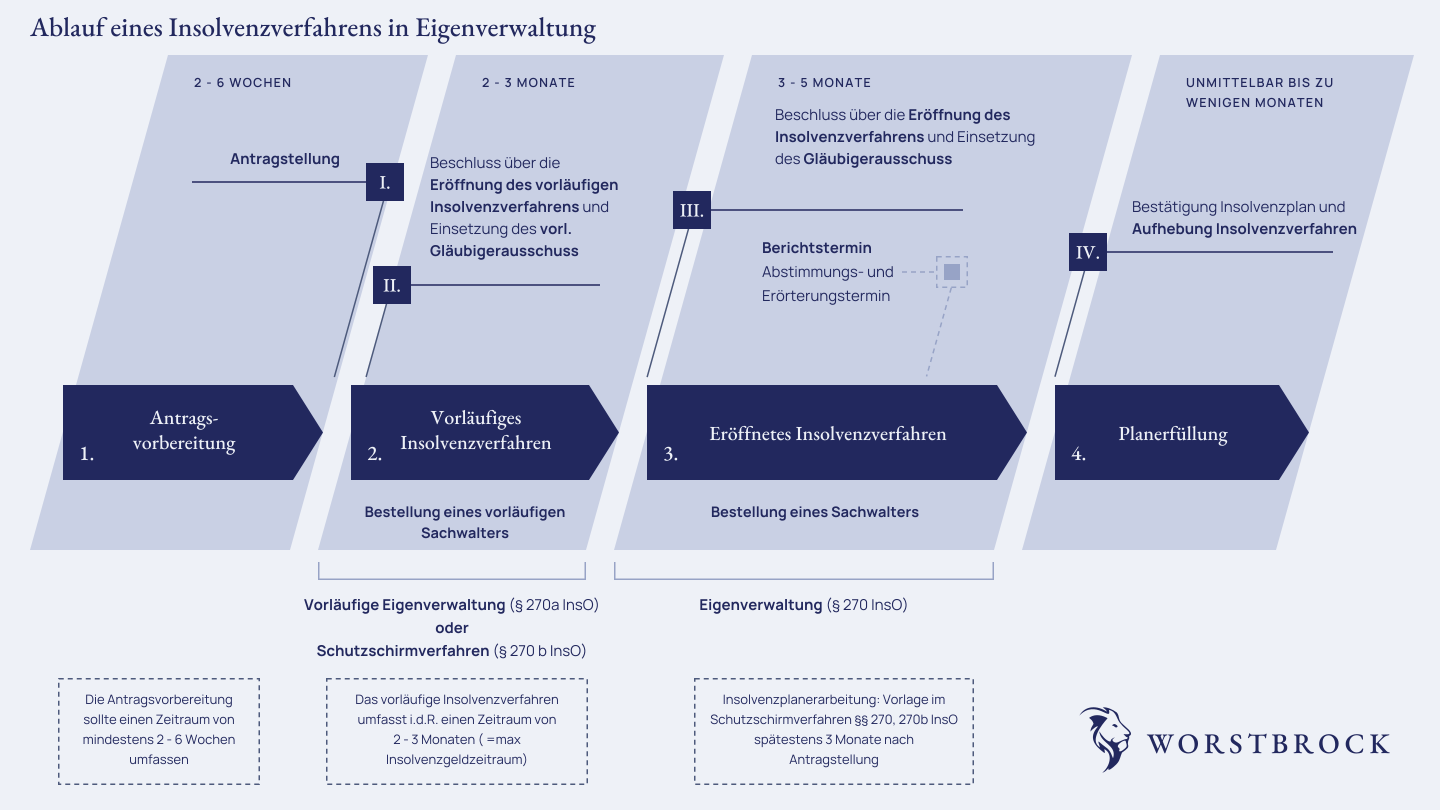
Four phases
Preparation. Assessment of restructuring viability, setting up liquidity planning, drawing up the Eigenverwaltung planning, selection of and coordination with the proposed insolvency monitor, preparation of communication. This phase determines everything that follows and takes four to eight weeks, depending on the starting position.
Preliminary proceedings. Once the application has been filed, the court orders preliminary Eigenverwaltung. Wages are covered by pre-financing of insolvency benefit, old liabilities are no longer serviced, operations continue. This is when it becomes clear whether suppliers and customers stay. Communication is decisive here.
Opened proceedings. The court opens the proceedings, Eigenverwaltung is confirmed and the insolvency monitor supervises. The restructuring measures are implemented, and the Insolvenzplan is drawn up in parallel.
Insolvenzplan and cancellation of the proceedings. The plan sets out how creditors are satisfied and where the company stands afterwards. If the creditor groups approve and the court confirms the plan, the proceedings are cancelled. The company is free of its old debts and continues to operate.
Our role
Procedures compared
| Procedure | Duration | Supervision |
|---|---|---|
| Out-of-court restructuring | open | none |
| Schutzschirmverfahren (protective shield proceedings, Sec. 270d InsO) | up to 3 months | Insolvency monitor |
| Eigenverwaltung | 6 to 9 months | Insolvency monitor |
| Regular insolvency proceedings | 12 months or more | Insolvency administrator |